How E-Commerce Fulfillment Works: From Checkout to Doorstep
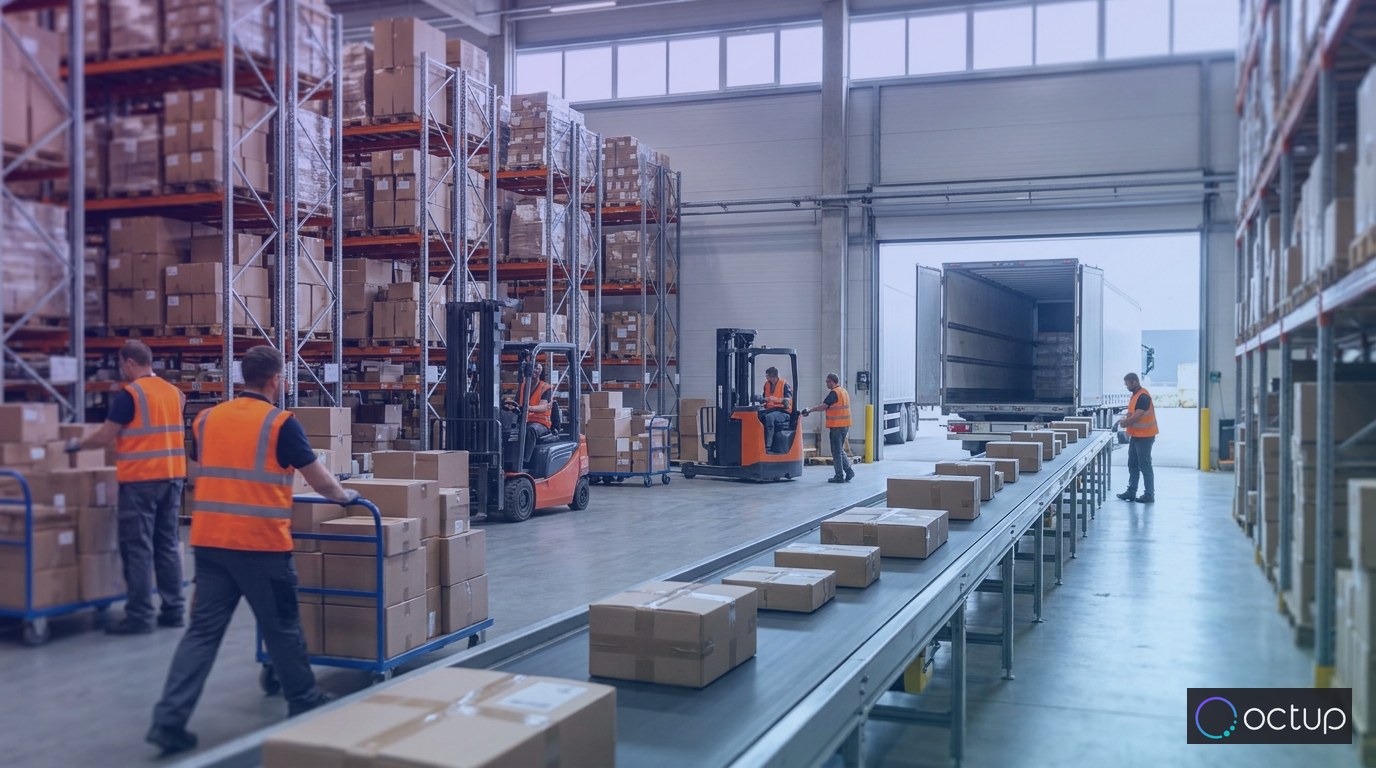
E-commerce fulfillment is a multi-stage operational chain that runs from a shopper's checkout click to carrier delivery at the customer's doorstep. E-commerce fulfillment moves each order through order data transmission, 3PL warehouse picking and packing, carrier handoff, and final-mile delivery. Every stage in e-commerce fulfillment is a potential failure point that determines whether the customer receives the right product, on time, in good condition. Each stage of the chain takes the previous stage's output as its input, so an error at one stage carries into every stage that follows.
What happens between a customer clicking 'buy' and the 3PL receiving the order?
E-commerce checkout triggers order transmission to the 3PL warehouse management system via API or EDI integration. The order then passes fraud screening, payment confirmation, and address validation, routes to the correct warehouse node, and arrives in the WMS for inventory reservation before any picking begins.

Checkout completion does not equal fulfillment start. A latency gap sits between order placement and WMS receipt, and the integration type determines the gap size: a real-time API pushes the order within seconds, while a batch EDI connection holds orders until the next scheduled file transfer. This gap is the hidden source of many "order not found" customer service contacts in the first hour after purchase, because the shopper holds a confirmation email while the 3PL still has no record. Extensiv's 2024 Third-Party Logistics Warehouse Benchmark Report found that 3PLs without direct integrations to order management systems or shopping carts experience slower order turnaround and limited fulfillment visibility. The interval between checkout and WMS receipt opens the checkout-to-doorstep fulfillment process, and delays at this stage propagate into picking, packing, and carrier handoff.
An order management system or a direct platform integration routes the released order to the correct fulfillment node. Shopify and WooCommerce connections pass order data into the OMS, and the OMS applies routing logic based on inventory location and delivery destination. Whether a brand builds direct API connections or buys middleware tooling is the brand-side fulfillment build-or-buy choice, and the outcome fixes which integration type the brand runs. Brands selling across multiple channels face extra configuration work. Orders from a DTC site, Amazon, and wholesale portals can follow different injection paths and fulfillment rules, and the brand must configure each channel in the OMS or 3PL portal before go-live.
Three pre-warehouse checks act as hold points before release to the WMS. Fraud screening flags risky transactions for review, payment confirmation verifies that the charge cleared, and address validation standardizes the destination against postal databases. An order that fails any check stays in hold status and never enters the warehouse queue until the brand resolves the exception.
When the WMS receives the order, the system performs inventory reservation: the WMS locks the required units against available stock so no competing order can claim them. Reservation precedes any pick task, and injection timing decides whether the order makes its carrier cutoff, the central variable in daily ship-by window management. The complete e-commerce order fulfillment walkthrough covers the pick, pack, and delivery stages that follow reservation.
Order injection fails in predictable ways. Duplicate orders appear when a confirmation page refreshes or a webhook retries; missing SKU data blocks the WMS from mapping order lines to warehouse items; address format errors stall transmission when the receiving system rejects the payload. According to Xapplets in 2026, common automation issues in order fulfillment processing include API mismatches, incorrect configuration, permission errors, and failed integrations. CloudXSystems reported in 2026 that brittle scripts, manual exports, and batch updates in OMS-to-WMS integration workflows create inventory update latency that causes overselling and stockouts, manual re-keying that consumes hours of labor each week, and limited status visibility that drives support tickets.
How does a 3PL warehouse physically process and pack an e-commerce order?
A 3PL warehouse executes pick, pack, and label generation as discrete sequential steps directed by the WMS. Workers pick items from assigned bin locations, packers verify and box the order, a barcode scan confirms accuracy, and the system prints a carrier label before the daily pickup cutoff.

1. Pick. The WMS generates a pick list or directs a handheld scanner to the correct bin location for each order line. The pick method, whether single-order, batch, zone, or wave, affects both speed and accuracy, and measuring orders processed per shift quantifies that throughput tradeoff.
2. Pack. Packers verify the picked items against the order, place them in appropriately sized packaging, and add void fill plus any brand-specific inserts or custom packaging. Packaging decisions affect both dimensional weight shipping cost and the customer's post-delivery brand perception, a relationship the unboxing experience and brand identity covers in detail.
3. Quality control scan. At pack-out, a scan confirms each item barcode matches its order line before the packer seals the box. Order accuracy is measured at the pick and pack stage, making it the single most operationally controllable fulfillment metric. According to Descartes Finale (2026), small to medium businesses typically start at 95–97% picking accuracy with manual systems and reach 99.5% or higher after implementing barcode scanning and warehouse automation.
4. Label. The carrier rate-shopping engine generates the shipping label from the order's weight, dimensions, destination, and contracted service level. This step applies dimensional weight pricing, so an oversized carton can bill above its actual scale weight.
5. Cutoff. The order cutoff time governs whether a packed order makes that day's carrier pickup. Orders completed after cutoff hold until the next pickup window.
Some 3PLs run a pick-and-ship model where packing and labeling happen simultaneously at a single station rather than as sequential steps, which reduces handling but limits packaging customization. The work stays labor-intensive even in automated facilities: U.S. Bureau of Labor Statistics data reported by MTLI Group in 2026 counts nearly 458,000 stock clerks and order fillers in the warehousing and storage subsector. Together, these steps form the outbound portion of the 3PL storage and dispatch flow stages.
How does an order get from the warehouse dock to the customer's door?
An order travels from the warehouse dock to the customer's door in three stages: carrier pickup, routing through the carrier's sortation network, and final-mile delivery. A manifest scan at pickup starts transit tracking for the order.
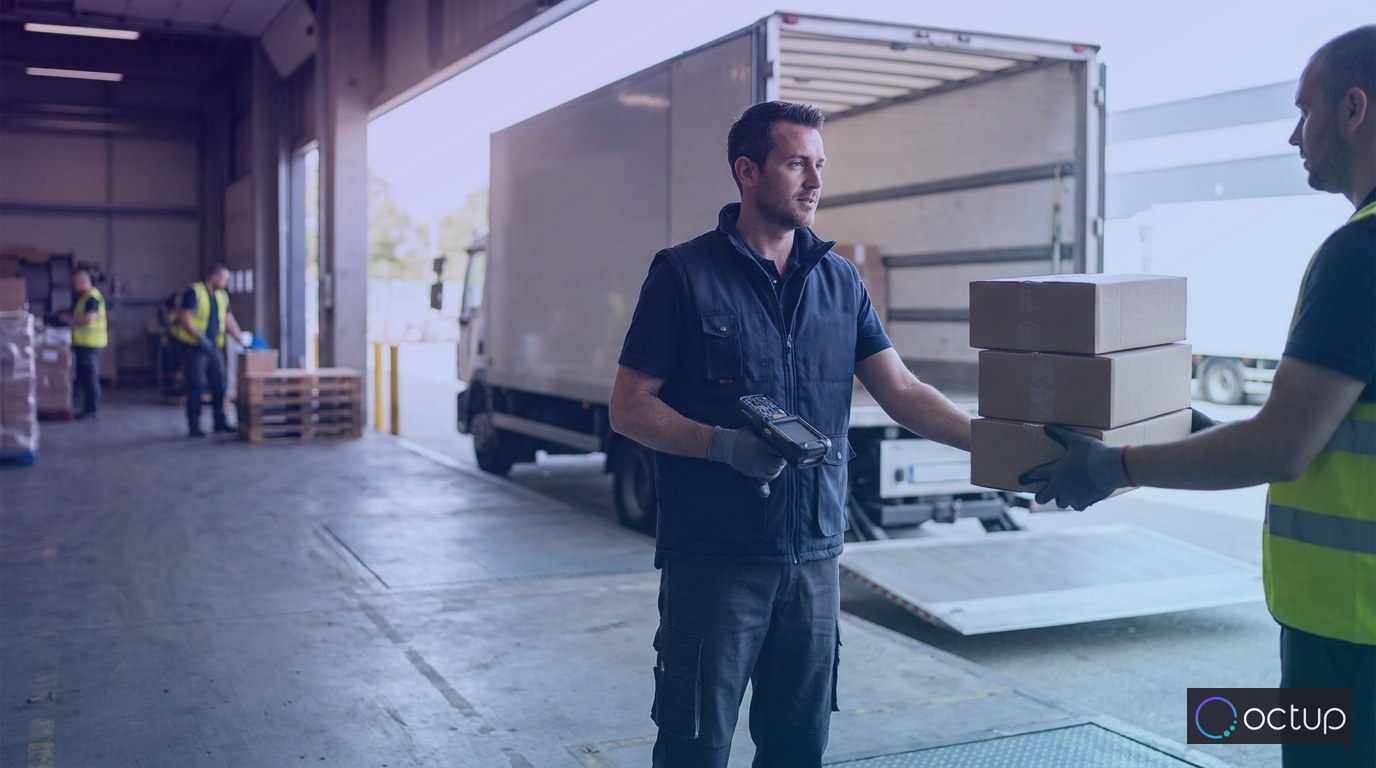
1. Carrier pickup at the dock. Carrier handoff marks the point at which the 3PL loses physical custody of the order and last-mile delivery begins. The manifest scan creates the tracking event that marks the order in transit for both the brand and the customer. The handoff does not end the 3PL's responsibility: scan failures and manifesting errors at the dock create tracking gaps that the 3PL must resolve even after custody transfers.
2. Sortation and line-haul transit. The carrier routes the parcel through its sortation network. Transit time depends on the selected service level (ground, 2-day, or overnight) and on the lane distance between origin and destination. UPS, FedEx, and the US Postal Service delivered 61,287,671 packages per day in 2024, according to Kase (2025).
3. Final-mile delivery. A local driver completes the last leg to the doorstep. SmartRoutes (2025) reports first-attempt delivery success rates of 97.2% in the US, 93.7% in the UK, and 88.07% in Ireland. Residential deliveries follow different carrier rules and surcharge structures than commercial deliveries, a distinction brands see when they analyze their fulfillment cost breakdown by delivery zone.
Delivery speed tier is determined by order cutoff time, carrier service selection, and warehouse-to-customer distance. Same-day or next-day delivery is not purely a carrier choice: an order placed after the warehouse cutoff waits until the next processing cycle regardless of the service purchased. Brands comparing fulfillment speed tiers must weigh cutoff times and pick-pack speed alongside carrier transit maps.
Carrier invoices reflect pricing mechanics beyond the quoted rate. Almost all major carriers charge by whichever is greater, actual weight or dimensional weight, according to Kase (2025). Calcurates (2026) found the gap between checkout shipping rates and actual carrier invoices ranges from 20% to 100% per order for certain product categories. These surcharges and weight adjustments make up the true cost of shipping an order.
Where Do Fulfillment Failures Happen in the Checkout-to-Doorstep Chain?
Fulfillment failures occur at five structural handoffs: order injection, inventory reservation, pick confirmation, pack verification, and carrier manifesting. The order fulfillment cycle contains five distinct handoff points where errors, delays, or data failures can cascade downstream, each handoff owning a signature error type.

Most fulfillment errors are not random. They cluster at predictable process points: order injection, pick confirmation, and pack verification. That clustering makes error rate a process design metric, not a volume or staffing metric, and analysis of the root causes of fulfillment mistakes assigns each error category to its stage of origin.
1. Order injection. Corrupted order data, duplicate orders, and dropped line items enter the warehouse management system before work begins. 2. Inventory reservation. Oversold stock and stale available-to-promise counts promise units the building cannot ship. 3. Pick confirmation. Wrong item and wrong quantity errors originate almost exclusively at pick, making pick accuracy the primary lever for the overall order accuracy rate. 4. Pack verification. Damaged goods originate at pack through insufficient void fill, wrong box size, or fragile item handling failures. 5. Carrier manifesting. Label mismatches, missed scans, and unmanifested parcels corrupt tracking data before carrier possession.
Pick-stage errors carry the steepest cost curve. Alexander Jarvis reports that picking accuracy standards fall between 96% and 98%, with each error costing over $20 and 30% of customers not returning after an incorrect order (2025). The defining order accuracy in fulfillment covers the benchmark: greater than 99%, with best-in-class providers above 99.8% (DCL Logistics, 2026).
Damage is the pack-stage signature. Opensend reports that damaged parcels rose 30% year over year to 85 million in 2024, and 51% of consumers are unlikely to repurchase after receiving a damaged product (2025).
Carrier-stage failures, including lost parcels, failed delivery attempts, and addresses not found, sit outside 3PL control, but resolution workflows for carrier exceptions remain the 3PL's responsibility. Retail Dive found that only 39% of consumers blamed shipping providers for delivery problems in 2025, down from 83% in 2022, so brands and their 3PLs absorb the reputational cost (2025).
Sources
- DCL Logistics, "What KPIs Should You Track for Your 3PL? Metrics, Benchmarks, and SLA Guidance" (2026)
- Descartes Finale, "How to Improve Order Picking Accuracy: 8 Proven Strategies" (2026)
- Alexander Jarvis, "Warehouse Picking Accuracy" (2025)
- MTLI Group, "Improve Warehouse Picking Accuracy: Proven Steps" (2026)
- CloudXSystems, "API-first WMS: Integrations and Fulfillment ROI" (2026)
- Xapplets, "E-commerce Automation: Order Processing Guide 2026" (2026)
- Kase, "Dimensional DIM Weight: How to Calculate and Reduce It" (2025)
- Calcurates, "Dimensional Weight Pricing in Shipping | Why Ecommerce Stores Pay More Than Expected" (2026)
- Opensend, "22 Shipping Damage Rate Statistics for eCommerce Stores" (2025)
- SmartRoutes, "Delivery Success Rates: Key Stats for Retail and eCommerce" (2025)
- Retail Dive, "Consumers Blame Retailers, Merchants for Delivery Issues" (2025)

Octup



About the Author: Alon Partuk
Alon Partuk is Founder & CEO at Octup. Alon built Octup after seven years in D2C, scaling his brand Apricoat into a multi-million dollar company — where he lived the 3PL pain firsthand: missing visibility into inventory, marketing performance, and SKU-level costs. He launched Octup in 2022 as the first platform to unite warehouse intelligence with billing automation, purpose-built to close the gaps WMS platforms leave behind. Connect with Alon on LinkedIn.
Related Posts
.webp)
.webp)