3PL Business Development and Sales

3PL business development is the structured process fulfillment operators use to build a repeatable pipeline of brand clients. A disciplined 3PL business development program spans defined outreach channels, a consultative sales cycle, proposal strategy, and pricing calibrated to margin targets. 3PL operators that grow predictably run that process deliberately instead of depending on referrals and reactive quoting to fill warehouse capacity. Idle capacity burns margin every day.
What does 3PL business development actually involve — and how is it different from general B2B sales?
3PL business development is a structured, repeatable sales process distinct from ad-hoc referral growth. The function spans outreach, sales cycle management, proposal writing, pricing, and the post-win onboarding handoff, and 3PL sales runs consultatively because brands commit to a multi-year operational dependency rather than a transactional purchase.

Lead generation is only the first input to 3PL business development. The same team that sources a brand prospect owns discovery, solution design, the proposal, rate negotiation, and the handoff to implementation, because every promise made during the sale becomes an SLA commitment on the warehouse floor. A sloppy handoff is a common cause of early client churn in fulfillment relationships.
Brands outsource a core operational function for years at a time, so the evaluation reads like diligence, not shopping. Buyers tour facilities, review order accuracy and dock-to-stock metrics, scope system integrations, and model cost per order before signing. Over 90% of Fortune 500 companies utilize at least one 3PL provider, according to Accio.com (2026), which reflects how seriously large brands treat the outsourcing decision. Larger deals follow a formal procurement motion: enterprise client acquisition for 3PLs involves RFP responses, security questionnaires, and multi-stakeholder reviews that can run for quarters.
The buying committee usually includes three roles, and each role scores a 3PL differently. The head of operations evaluates SLA history, order accuracy, peak-season throughput, and warehouse management system capability. The supply chain manager evaluates network position, shipping zones, carrier rates, and the resulting cost per order. The founder evaluates flexibility, minimum commitments, and the cash-flow impact of the contract. Proposals that address only one role stall in committee.
Referral-only growth fails at scale because referral volume is uncontrolled: referrals arrive without regard to capacity, vertical fit, or margin. Meanwhile the market keeps expanding. Global Market Insights (2025) valued the global 3PL market at roughly $1.24 trillion in 2024 and projects growth at a CAGR of about 9% to 10.5% through 2033, and Digital Commerce 360 (2024) reports that e-commerce accounts for 70% of many 3PLs' business portfolios. Growth attracts competition. A documented process keeps pipeline generation predictable, which matters because running every aspect of a 3PL already consumes management bandwidth and leaves little room for founder-led selling.
How do 3PL operators find and attract new brand clients?
3PL operators find new brand clients by defining an ideal client profile, then working outbound channels (LinkedIn prospecting, cold email, trade shows) and inbound channels (SEO content, referral programs, marketplace listings) in parallel, because proactive outreach closes accounts that referrals alone never reach.
1. Define the ICP before outreach. An ideal client profile filters prospects by monthly order volume, SKU count, geographic delivery footprint, and product category, so the pipeline holds only winnable, profitable accounts.
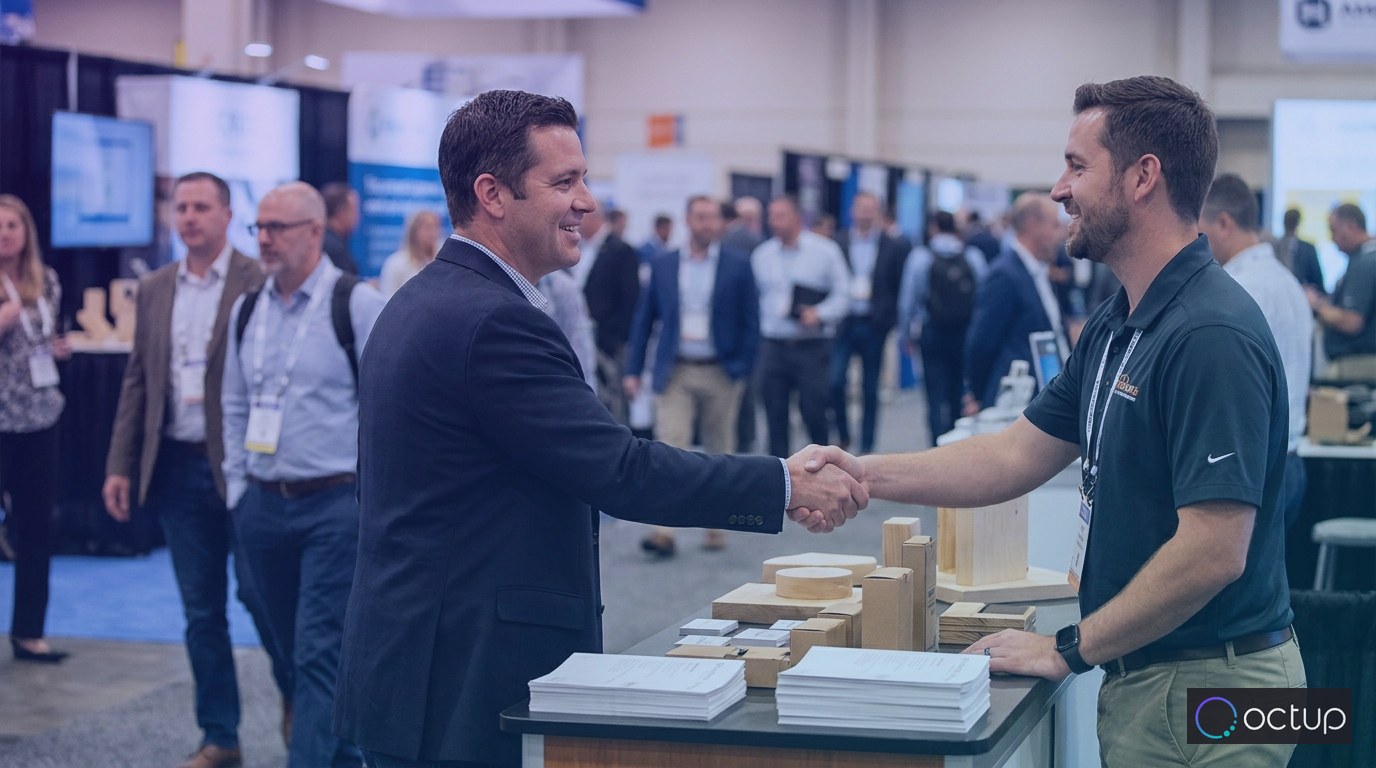
2. Run outbound prospecting. 3PL operators targeting DTC and e-commerce brands at scale use outbound prospecting across three channels: LinkedIn prospecting aimed at e-commerce operations roles, cold email sequences to DTC brands segmented by vertical, and a trade show presence at ShipBob Summit, Manifest, and Accelerate. The prospecting strategies for 3PL sales cover sequencing and list construction.
3. Build inbound for the research phase. According to a 2024 Demand Gen Report study, buyers spend 70% of the journey on independent research and 85% set purchase requirements before contact; Brixon Group (2026) puts direct vendor contact at 17% of buying time. SEO content targeting brand-side search queries does the work of showcasing 3PL value to attract brands during that window. Marketplace listings in the Flexport and Shipware partner directories, plus referral programs with freight brokers and e-commerce agencies, round out the inbound mix.
4. Incentivize partnership channels. Freight brokers, Shopify agency partners, and e-commerce consultants deliver high-quality referrals when the agreement carries a co-sell incentive, revenue share or reciprocal referrals, and most operators overlook these channels in favor of direct outreach.
5. Break the referral ceiling. Operators who rely on inbound referrals alone plateau at 8 to 15 clients because no systematic outbound pipeline exists. Corporate Visions (2026) reports proactive opportunities win at 33-41% against 18-25% for reactive ones, with 19-30% higher annual revenue. Productiv (2026) finds 57% of e-commerce companies already outsource fulfillment, so growth means winning brands from competing providers, not converting first-time outsourcers.
What does the 3PL sales process look like from first inquiry to signed contract?
The 3PL sales cycle contains five stages: discovery call, warehouse site visit, proposal delivery, pricing negotiation, and contract signing. For mid-market DTC brands, the full cycle typically runs four to twelve weeks from first inquiry to executed agreement.

1. Discovery call. The discovery call qualifies order volume, SKU profile, current 3PL pain points, go-live timeline, and decision-maker structure before the operator invests hours in a proposal. A brand shipping 2,000 orders a month with a 60-day go-live is a different conversation than one exploring options for next year.
2. Warehouse site visit. The site visit is the highest-leverage close moment in the cycle, and most operators walk in unrehearsed. Brands use the visit to assess operational cleanliness, staff competence, and technology maturity, not just rack capacity. Script the tour route, run the WMS live on a real order, and introduce the ops leads by name. Operators who treat the visit as a staged demonstration close at materially higher rates than those who treat it as a casual walkthrough.
3. Proposal delivery. The proposal translates discovery findings into a pricing structure, SLA commitments, and an implementation timeline. For brands migrating from a competitor 3PL, the pain points are specific and urgent and the close timeline compresses, but the onboarding risk rises. Client onboarding migration precedes live fulfillment operations in every competitor win, so presenting a migration playbook inside the proposal is a strong differentiator, and the client onboarding and account retention tactics cover that transition work in detail.
4. Pricing negotiation. Negotiation centers on pick fees, storage rates, minimums, and peak surcharges. Hold the line on unit economics and concede on structure instead.
5. Contract signing. According to Logistics Bureau, a 3PL contract typically lasts one to three years, with some extending up to five years.
Pre-built proposal templates, reference client calls, and a milestone-based follow-up cadence compress the cycle toward the four-week end. The full resource on taking a brand from inquiry to contract documents each stage in detail.
How do you write a 3PL proposal that wins brand clients?
A winning 3PL proposal has four required parts: capability proof matched to the brand's SKU and volume profile, a transparent pricing summary, SLA commitments, and an onboarding timeline, framed by an executive summary that mirrors the brand's pain points and closing with reference clients.

Build the proposal in this order:
1. Executive summary of pain points. Restate the brand's fulfillment problem in the brand's own words: split shipments, rising cost per order, missed same-day cutoffs. 2. Capability proof. Show throughput and accuracy figures from clients at a similar SKU count and monthly order volume, not total warehouse square footage. 3. Pricing summary. Name every fee in a line-item or bundled cost-per-order format. 4. SLA commitments. Commit to numbers: order accuracy, same-day ship rate, inventory accuracy, and the service credits behind each. 5. Onboarding timeline. Map weeks from signature to first live order, with WMS integration and inventory transfer milestones. 6. Reference clients. Give two or three brands of similar size the prospect can call.
These six components are the proposal elements that convert brand prospects, a structure detailed further in How to Write a 3PL Proposal That Wins Brand Clients.
The most common proposal mistake is opening with the 3PL's history and warehouse square footage instead of the brand's problem. Brands self-select out when the first page describes the operator instead of the brand's situation, because nothing on the first page speaks to brand decision factors when choosing a 3PL. Company history belongs in an appendix.
Pricing presentation decides whether the proposal starts a partnership or a bidding war. Line-item transparency, with pick, pack, storage, receiving, and kitting priced separately, fits established brands whose finance teams compare the proposal against an incumbent 3PL. Bundled cost-per-order fits first-time outsourcers who want one predictable invoice line. According to a 2024 Astute Analytica report, 68% of businesses reported cost savings in their overall logistics operations as a result of outsourcing, and the pricing table is where the brand validates that outcome for its own P&L.
How should 3PLs price their services to win clients without sacrificing margin?
3PLs win clients without sacrificing margin by publishing a standard rate card, setting a cost-plus floor, benchmarking market rates, charging value-based premiums for specialization, and enforcing minimum monthly commitments that protect unit economics when volume falls short.

Margin pressure makes pricing discipline non-negotiable. According to Logistics Management (2024), 3PLs saw an 8.8% drop in total revenue in Q4 2023 versus Q3 2023, with average gross margin at just 15.6%.
1. Build the standard rate card. 3PL pricing strategy applies to pick-and-pack fees (per order plus per item), storage rates (per pallet or bin per month), receiving fees (per pallet or carton), and value-added service surcharges for kitting, labeling, and custom packaging. 2. Set the floor with cost-plus pricing. Cost-plus pricing stacks a target margin on fully loaded labor and overhead per order, and the floor tells sales when to walk away from a bad deal. 3. Benchmark, then charge for value. Market-rate benchmarking positions the card against competing fulfillment providers, while value-based pricing adds a premium where specialization or warehouse technology lowers a brand's cost per shipped order. Operators converting prospects with value-based pricing in competitive bids can apply the premium-positioning frameworks in 3PL Pricing Strategy: How to Price Services to Win and Keep Clients. 4. Require minimum monthly commitments. A minimum bills the greater of actual fees or a committed baseline, keeping margin intact when a brand under-ships. A baseline set near realistic volume keeps price-sensitive prospects signing. 5. Gate bundled cost-per-unit pricing. DTC brands increasingly request a single per-order rate bundling pick-and-pack and storage, a structure that transfers volume risk to the operator. Operators should offer bundled pricing only to clients with 90+ days of order history and a minimum monthly volume commitment, and decline bundled pricing for new brands with unproven demand. 6. Schedule annual pricing reviews. Annual reviews written into the client contract from day one protect margin against labor and real estate inflation without triggering churn, because the increase is expected rather than a surprise.
How do 3PL operators differentiate themselves in a crowded fulfillment market?
3PL operators differentiate along six positioning axes: vertical specialization, technology differentiation, geographic coverage, service guarantees, reporting quality, and onboarding speed. Strong operators build positioning on proven operational strengths and sell to the brand segment that values those strengths most.

The market rewards focus. According to Accio.com in 2026, the top 10 global 3PL providers control less than 30% of the market, leaving specialized and regional operators real room to win. The six axes:
- Vertical specialization: category depth in beauty, apparel, or CPG
- Technology differentiation: a real-time client portal and EDI integrations
- Geographic coverage: warehouse placement that cuts shipping zones
- Service guarantees: same-day cutoffs and accuracy SLAs
- Reporting quality: visibility a brand's ops team can act on
- Onboarding speed: days to first order, not months
3PL operators use vertical specialization to command premium pricing and reduce competitive comparison, because category fluency pulls the operator off like-for-like rate cards. Technology creates similar separation: Extensiv's 2024 Third-Party Logistics Warehouse Benchmark Report found that 74% of shippers would be at least somewhat likely to switch 3PL providers based on AI capabilities, yet only 25% of 3PLs were exploring AI in 2024, up from 16% in 2023.
Competing on price alone marks a 3PL as a commodity. Commodity positioning attracts price-sensitive clients, and those clients carry the highest churn rates in the book because they leave over pennies per order. Operators that invest in strategic differentiation for 3PL growth protect margin instead of discounting it away.
Identify a genuine differentiator by working backward from the floor, since standing out to retain top e-commerce brands depends on proof a brand's team can verify in the first 90 days:
1. Audit measured strengths: accuracy rate, dock-to-stock time, cutoff hit rate. 2. Map each strength to the brand segment that values it most. 3. State the differentiator in that segment's units, such as cost per order or damage rate.
Sources
- Global Market Insights, "Third-Party Logistics Market Size & Share, Statistics Report 2035" (2025)
- Accio.com, "3PL Industry Trend Statistics: 2025 Supply Chain Focus Revealed" (2026)
- Digital Commerce 360, "Ecommerce drives growth for 3PL providers amid industry challenges" (2024)
- Productiv, "8 3PL Trends in 2026: What's Actually Changing" (2026)
- Logistics Bureau, "How to Structure 3PL Contracts - Full Guide"
- Demand Gen Report, "80% Of B2B Buyers Initiate First Contact, Once They're 70% Through Their Buying Journey" (2024)
- Brixon Group, "The Modern B2B Buying Journey: Gartner's 80% Rule (2026)" (2026)
- Corporate Visions, "B2B Buying Behavior in 2026: 57 Stats and Five Hard Truths That Sales Can't Ignore" (2026)
- Logistics Management, "Top 50 Third Party Logistics (3PLs) Providers 2024: Not out of the woods" (2024)
- Extensiv, "State of the Third-Party Logistics Industry Report" (2024)

Octup



About the Author: Alon Partuk
Alon Partuk is Founder & CEO at Octup. Alon built Octup after seven years in D2C, scaling his brand Apricoat into a multi-million dollar company — where he lived the 3PL pain firsthand: missing visibility into inventory, marketing performance, and SKU-level costs. He launched Octup in 2022 as the first platform to unite warehouse intelligence with billing automation, purpose-built to close the gaps WMS platforms leave behind. Connect with Alon on LinkedIn.
Related Posts