The Complete Guide to Running a 3PL Fulfillment Operation
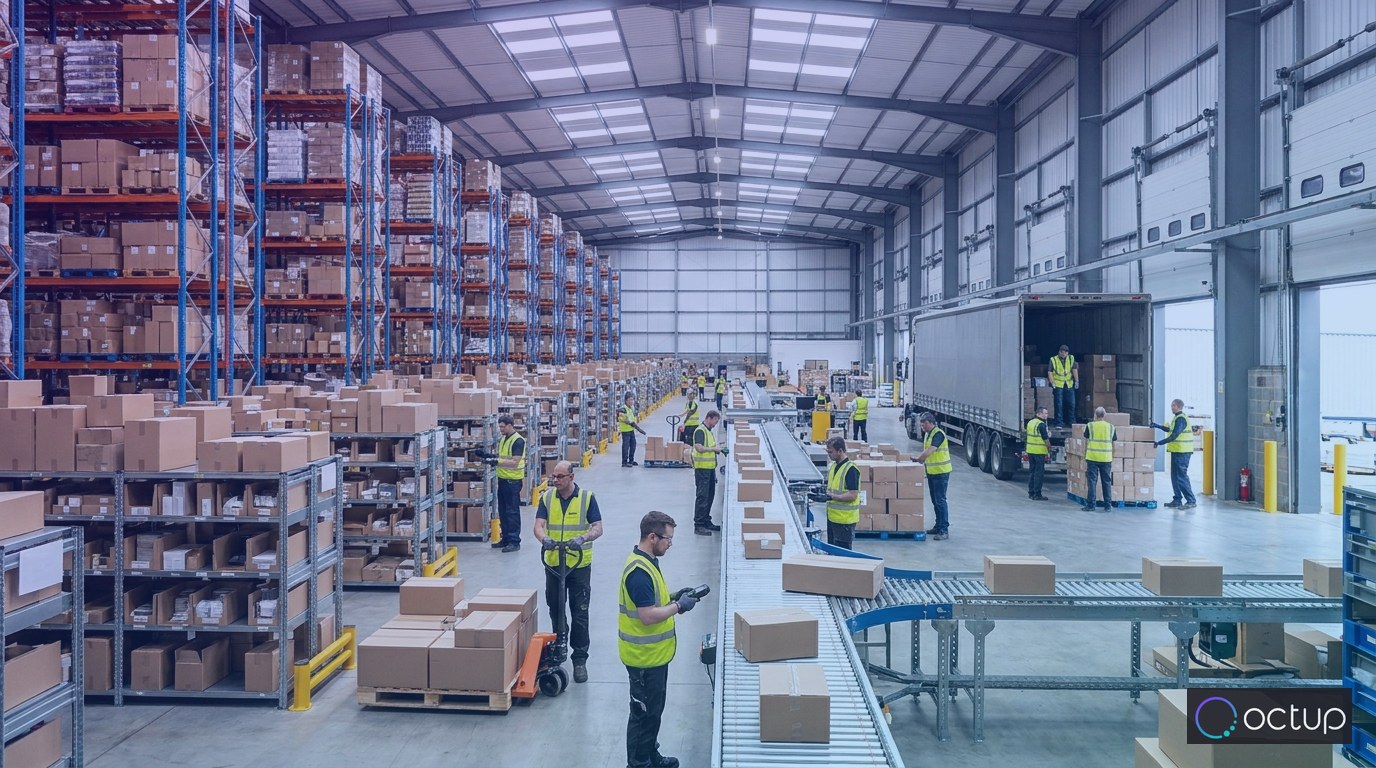
A third-party logistics (3PL) fulfillment operation warehouses and ships goods for multiple e-commerce brand clients at once, and the business runs on high complexity and thin margins. A 3PL fulfillment operation earns revenue from storage, pick, pack, and shipping fees while absorbing the labor, space, and carrier costs that punish small mistakes. Operational discipline, billing precision, and the ability to scale client accounts without proportionally scaling overhead separate profitable 3PLs from struggling ones.
What is a 3PL fulfillment operation and how does the business model work?
A 3PL fulfillment operation is a multi-client warehousing and order execution business. The 3PL stores inventory for multiple e-commerce brands, executes the pick-pack-ship cycle on each brand's orders, and generates revenue by charging those brands for storage, pick and pack, and value-added services. Octup builds operations software for 3PL fulfillment operators, and the multi-client model defines the workflows that software supports.
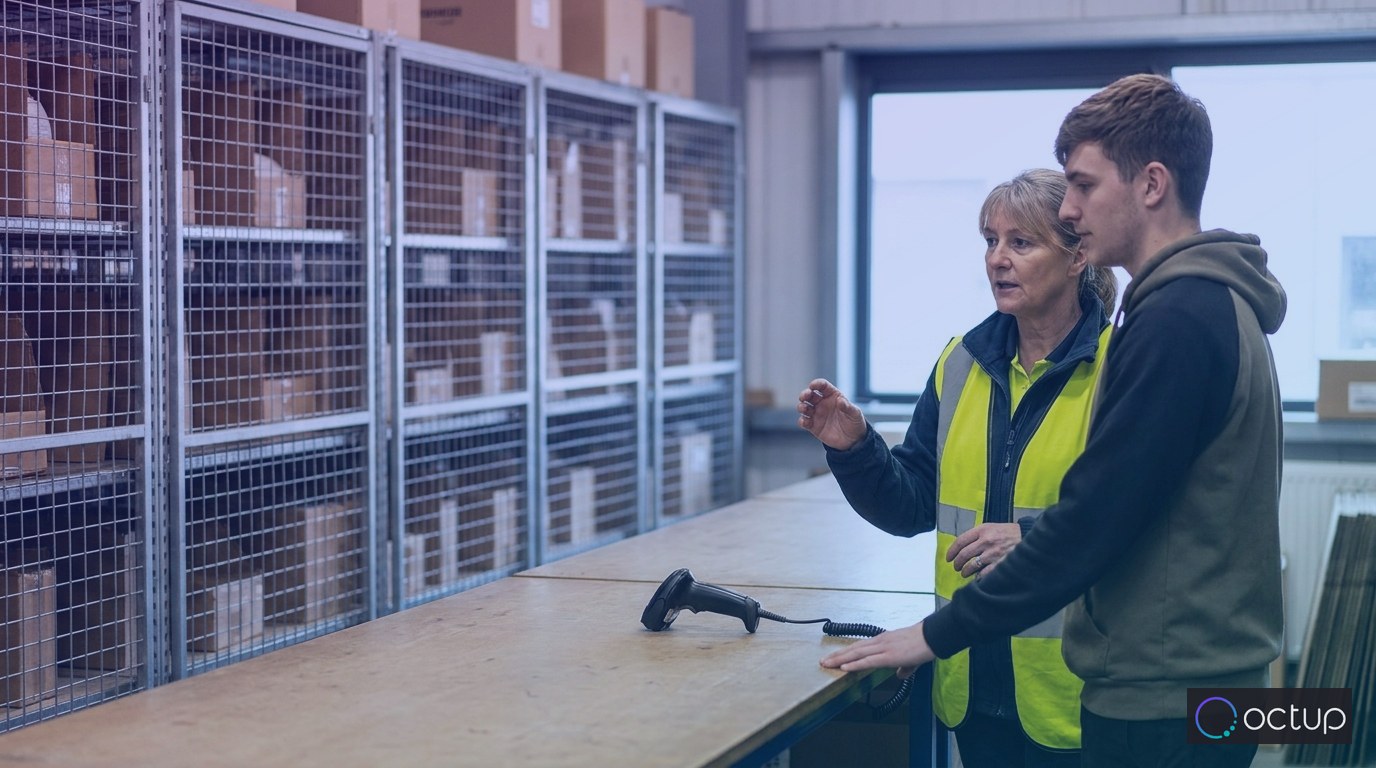
A 3PL operator differentiates itself from 1PL and 2PL providers by taking physical custody of inventory and managing the full pick-pack-ship cycle on behalf of brand clients. The provider categories break down by how much of the supply chain each one runs:
- 1PL: The brand owns the inventory and ships orders from its own facility, outsourcing nothing.
- 2PL: A carrier moves the brand's freight or parcels but never stores or handles that inventory.
- 3PL: The operator warehouses client inventory and runs receiving, picking, packing, and shipping under each brand's service commitments.
- 4PL: An orchestrator coordinates other logistics providers on the brand's behalf and operates no warehouses of its own.
The end-to-end eCommerce fulfillment explained traces each order from inbound receiving through carrier handoff.
Two relationships define the business. The first is the portfolio of brand clients whose inventory the 3PL holds under service-level agreements. The second is the set of parcel and freight carriers the 3PL routes shipments through. Brand order volume determines what the 3PL can negotiate from carriers, and carrier rates and cutoff times determine what the 3PL can promise brands.
The business model is a resource-sharing model. Fixed costs such as the warehouse lease, the warehouse management system, and fulfillment labor are amortized across the client portfolio, so each brand pays for the capacity its orders consume. A slow quarter for one brand is absorbed by another brand's peak, and operator margin depends on how tightly that shared capacity is managed. The foundational steps to open a 3PL detail the entity formation, facility commitments, and carrier contracts an operator needs before client inventory arrives.
What are the core operational flows inside a 3PL warehouse?
A 3PL warehouse runs three core operational flows: inbound, storage, and outbound. Inbound covers receiving, putaway, and inventory capture. Storage covers slotting, cycle counting, and multi-client segregation. Outbound covers order release, picking, packing, shipping, and carrier manifesting.
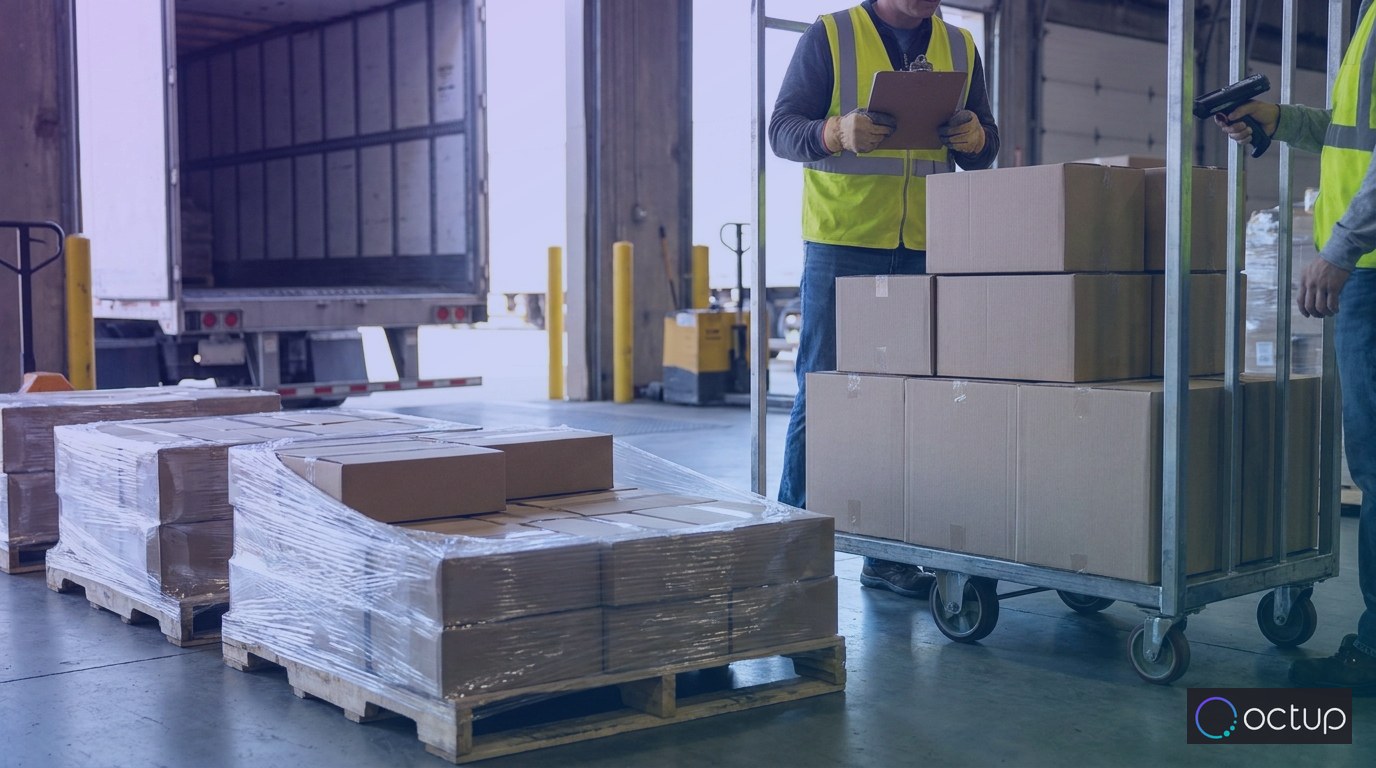
- Inbound flow. Receiving crews unload trailers, verify counts against advance ship notices, and capture every SKU into the warehouse management system. Putaway teams move verified freight to assigned locations, and the location scan is what makes that inventory sellable.
- Storage flow. Slotting assigns SKUs to locations based on velocity and pick path. Cycle counting audits locations on a rolling schedule. Multi-client segregation keeps each brand's stock physically and logically separate, even when two clients sell near-identical products.
- Outbound flow. The system releases orders in waves, pickers pull units by scan, pack stations verify contents and add client-specific inserts, and shipping stages cartons by carrier before the daily manifest closes.
The end-to-end warehouse flow overview documents how these three flows hand inventory from dock door to carrier trailer.
Multi-client complexity compounds at each stage. A misrouted inbound pallet lands one client's freight in another client's locations. Commingled inventory corrupts stock counts for both brands sharing a bin. A mis-picked order ships the wrong item under one brand while the unit shortfall quietly lands on a different client's available inventory.
Receiving accuracy and putaway speed set the ceiling for everything downstream. A slow dock leaves inventory unscanned and unsellable while orders queue against that stock. An inaccurate receipt corrupts the inventory record, and the error surfaces weeks later as phantom stock, short picks, and cycle count variances. Fix receiving first; pick accuracy follows.
What are the biggest cost drivers in a 3PL fulfillment operation?
Pick-and-pack labor is the largest variable cost center in a 3PL fulfillment operation, typically representing 50 to 70 percent of total operating costs, according to ExploreWMS. The warehouse lease, WMS licensing, and facility overhead form the fixed cost base.
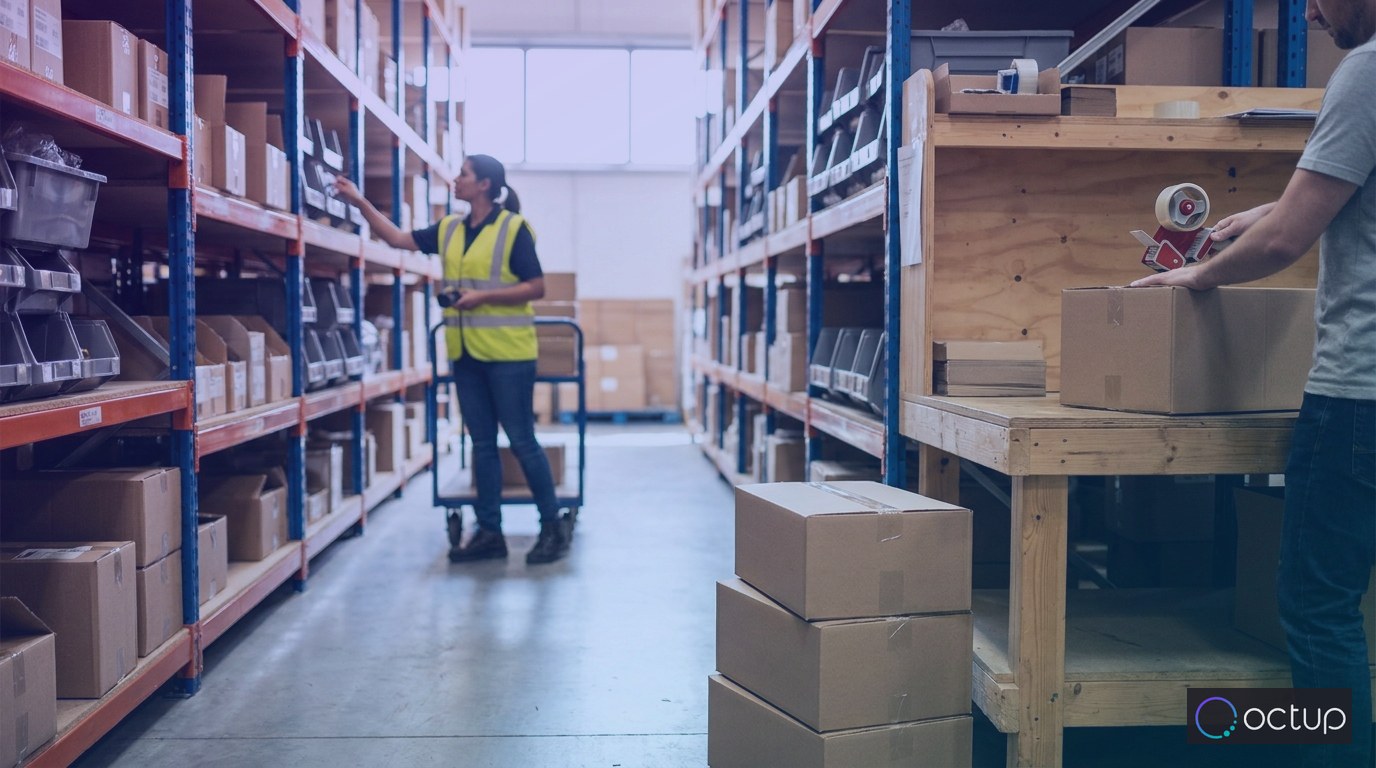
The cost structure breaks into four drivers:
- Pick-and-pack labor. According to WarehousingCosts.com (2026), pick-and-pack is typically the largest variable cost in order fulfillment. Every picking error compounds that spend, because a mis-pick generates a reshipment plus a returns touch, and both draw on the same labor pool.
- Warehouse lease. The lease is typically the largest fixed commitment a 3PL signs, and the rent bill does not shrink when order volume dips.
- WMS licensing. The warehouse management system carries recurring per-seat or per-site fees that run regardless of throughput.
- Facility overhead. Utilities, insurance, racking, and material handling equipment hold steady across slow weeks and peak weeks alike.
A common misconception holds that growing order volume automatically improves 3PL profitability. Volume alone does not. More orders at the same error rate produce proportionally more returns and reshipments, and that downstream work compresses margins instead of expanding them. Operators protect margin only when volume growth arrives alongside labor routing improvements such as pick path optimization and batch picking.
Labor scheduling relative to order cutoff times is the primary operational lever for controlling cost-per-order. Staffing against the cutoff curve keeps pick lines loaded without paying for idle hours before carrier pickup, and that discipline shows up directly in unit economics.
How do 3PL operators price their services and where does revenue leakage occur?
Third-party logistics operators price their services through three primary revenue streams: storage fees billed per pallet, bin, or cubic foot; pick-and-pack fees billed per order or per item; and accessorial charges for non-standard work. Revenue leakage occurs in two places: storage priced below true cost, and accessorial work rendered on the warehouse floor but never invoiced.

1. Storage fees charge the client for occupied space, priced per pallet, per bin, or per cubic foot per month. According to The Fulfillment Advisor (2026), storage typically runs $20 to $40 per pallet per month. 2. Pick-and-pack fees charge for labor per order or per item picked. The Fulfillment Advisor (2026) puts typical pick fees at $2 to $5 per pick. 3. Accessorial charges bill for non-standard services. 3PL operators use accessorial charges to bill for work such as kitting, returns processing, labeling, and special handling; The Fulfillment Advisor (2026) prices returns processing at $3 to $10 per unit, and PopCapacity (2026) reports receiving fees of $25 to $50 per pallet for palletized freight or $0.30 to $0.60 per unit for loose cartons.
Most 3PL operators underprice storage relative to pick-and-pack because they benchmark against public rate cards instead of modeling their own square-footage cost per pallet position. The portfolio consequence is a hidden cross-subsidy: high-SKU, slow-moving clients occupy space below cost while fast-moving clients overpay, and aggregate revenue reports never show the subsidy.
The second leak is structural. A returns intake, a special label requirement, or an extra handling step happens on the warehouse floor, while invoicing happens later at a desk from spreadsheets or manual rate cards. When capture is manual, billable events never get recorded, and unbilled accessorial work becomes a primary source of margin leakage. Billing automation for 3PL operators documents how warehouse systems convert floor events into invoice lines, and the definitive guide to 3PL billing and revenue operations maps the full pricing-to-cash discipline for operators closing the gap between services rendered and services invoiced.
How should a 3PL operator onboard new brand clients?
A 3PL operator onboards new brand clients through a structured intake that captures the SKU catalog, expected order volume, carrier preferences, packaging requirements, and returns policy, then sets service level agreements from operational reality and establishes the billing baseline before go-live.

Client onboarding precedes steady-state fulfillment and determines whether a 3PL-brand relationship becomes profitable or operationally chaotic. Most churn gets blamed on service failures during a rough peak week. The underlying cause almost always sits in onboarding: SLA terms agreed before the operator understood the client's SKU complexity, return rate, or seasonal volume profile. Every discipline in 3PL client management and retention traces back to what was promised in those first weeks.
1. Capture the operational inputs. Intake records the full SKU catalog with dimensions and handling notes, expected weekly order volume, carrier preferences, packaging requirements, and the returns policy. Each input drives labor, storage, and postage cost, so the data must be precise before quoting anything.
2. Set SLAs from operational reality rather than sales pressure. The pace of 3PL business development and sales rewards fast signatures. The floor inherits the promise. SLA terms must come from measured pick rates, carrier cutoff times, and proven peak capacity, because breached SLAs, not pricing disagreements, are the leading cause of 3PL client churn.
3. Establish the billing baseline. The onboarding file defines which accessorial services apply to the client and at what rates: kitting, custom packaging, returns processing, storage overages. Recording those rates before go-live prevents invoice disputes and protects margin on every order.
What technology does a 3PL operation need to run effectively?
A 3PL operation needs a warehouse management system with native multi-client capability as its operational core, connected to e-commerce platforms such as Shopify, carrier systems, and billing and analytics tools. Everything else on the floor runs off the WMS.
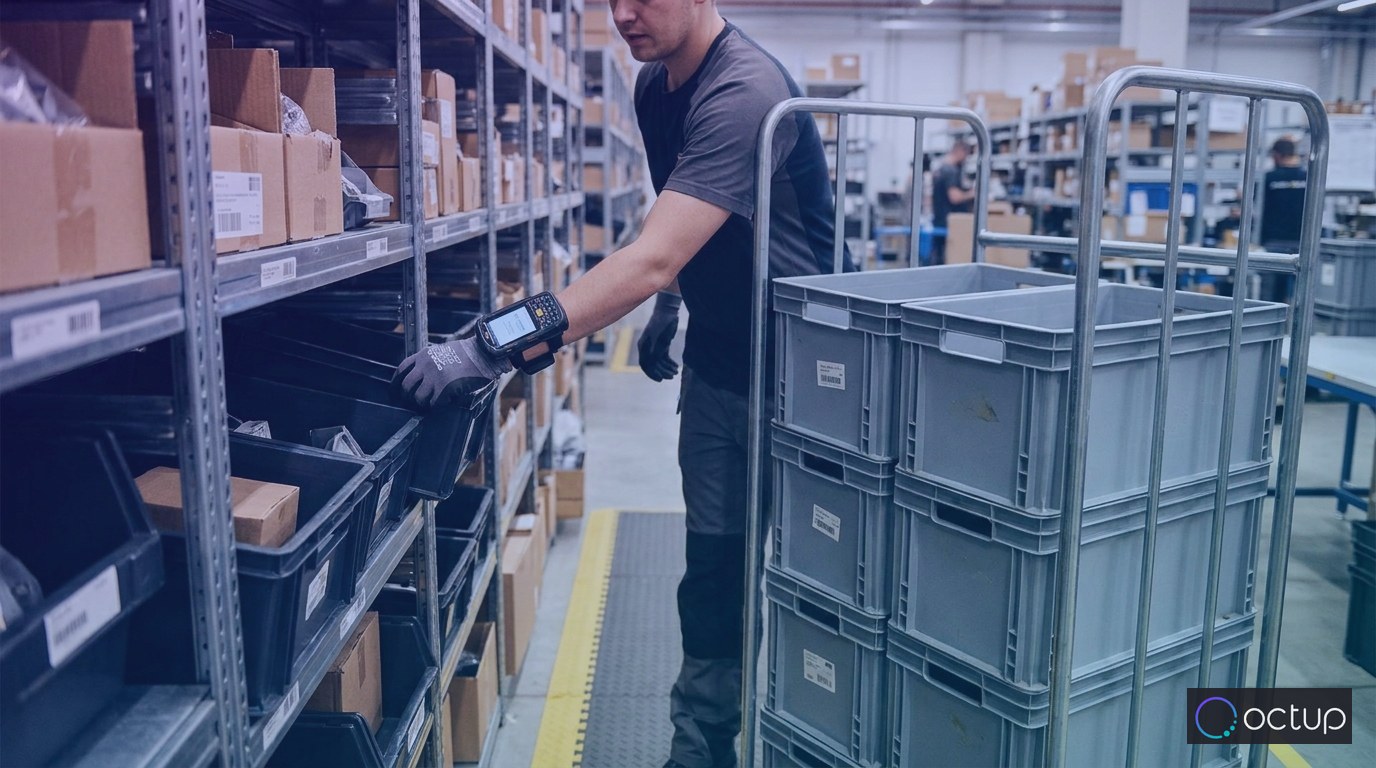
3PL operators use the warehouse management system to manage multi-client inventory, direct warehouse labor, and enforce order accuracy. Directed picking assigns pick paths and batches orders so labor hours track each client's volume, and scan validation at pack-out catches mis-picks before they turn into chargebacks.
The critical dividing line is architecture. A WMS built for single-operator use treats inventory as one pool, while a multi-client WMS partitions stock, billing rules, and SLAs by client account. Multi-client capability is a prerequisite for scaling beyond a single brand, because retrofitting client separation onto a single-operator platform produces manual workarounds that break under peak volume. The 3PL warehouse software overview documents platform categories and selection criteria for that evaluation.
The integration layer carries equal weight. The WMS must exchange data with e-commerce platforms, carrier rating and label systems, and billing and analytics tools, because siloed systems produce data gaps that cause both operational errors and billing leakage such as unbilled storage and missed accessorial charges. These connected modules form the end-to-end 3PL operations software that runs the order lifecycle from cart to invoice, and the complete 3PL operations solution maps that integration ecosystem in detail.
How do 3PL operators manage SLAs and maintain service quality across multiple clients?
3PL operators manage service-level agreements by contracting four standard metrics: same-day ship rate, order accuracy rate, receiving turnaround time, and return processing speed. Operators sustain SLA performance through upstream labor scheduling, inbound receiving speed, and order cutoff discipline, and operators track every metric on KPI dashboards.

1. Contract the four standard metrics. Clients measure a 3PL against same-day ship rate, order accuracy rate, receiving turnaround time, and return processing speed. ExploreWMS reports typical warehouse picking error rates around 1 to 3%, and many warehouses hold order accuracy at 99% or greater, so accuracy targets in SLA contracts commonly sit at that level.
2. Manage the upstream drivers. SLA performance is caused by the combination of labor scheduling discipline, inbound receiving speed, and order cutoff management, not by downstream exception management. Exception handling is too late. A slow receiving dock surfaces as missed same-day shipments hours later, labor scheduled against each client's cutoff protects the same-day ship rate, and accurate inventory data prevents mispicks and oversells. 3PL warehouse operations covering inbound, storage, and outbound flows documents the receiving and staging mechanics behind those drivers. SLA breaches are the leading cause of 3PL client churn, so upstream control functions as a retention discipline rather than an operations metric.
3. Resolve conflicts with tiering and allocation rules. Multi-client warehouses create SLA prioritization conflicts when two clients hold same-day SLAs and one pick team cannot clear both order waves before cutoff. Operators resolve these conflicts through client tiering, which ranks accounts by SLA strictness and contract value, and through labor allocation rules that reserve pick capacity for the highest-priority waves first.
4. Monitor KPIs before breaches occur. KPI dashboards flag cutoff risk, receiving backlog, and accuracy drift while operators still have time to act. Fulfillment analytics for 3PL operators details how these dashboards support proactive SLA management across every client account.
How do 3PL operators measure and improve profitability?
3PL operators measure profitability through per-client profitability analysis, tracking cost per order, revenue per order, storage revenue per pallet position, and labor cost as a percentage of revenue. Operators improve margins with two levers: labor efficiency and billing completeness.
1. Run per-client profitability analysis. Profitable 3PL operators use per-client profitability analysis to identify which brand accounts are margin-positive and which are subsidized by the rest of the portfolio. An account that looks healthy on revenue can quietly lose money once its receiving exceptions, returns volume, and special handling hours hit the ledger. 2. Track the four unit economics metrics. Cost per order and revenue per order show whether each shipment covers its handling cost. Storage revenue per pallet position prices the warehouse footprint, and labor cost as a percentage of revenue exposes staffing drag before it compounds. The Fulfillment Advisor (2026) reports most businesses spend 10-15% of gross sales on logistics, with highly efficient operations achieving as low as 8-10%, so clients watch these numbers as closely as operators do. 3. Pull the labor efficiency lever. Routing logic and batch sizing reduce touches per order, which lowers cost per order directly. Accuracy belongs in the same conversation: ExploreWMS reports a single picking error can cut an order's profit by approximately 13%. 4. Close billing gaps. Billing completeness captures every billable activity: receiving, special projects, storage overages, returns processing. Unbilled work converts margin-positive accounts into subsidized ones. 5. Build the reporting infrastructure. The 3PL profit and loss fundamentals cover the P&L structure behind these metrics, and the 3PL market benchmarks and data provide the comparison figures operators use to score their own numbers.
How do 3PL operators grow their client base and win new business?
3PL operators grow their client base through three channels: referrals from existing clients, listings in e-commerce platform marketplaces, and outbound prospecting to brands outgrowing self-fulfillment. Deals close through a consultative sales process covering discovery, a custom rate card, and SLA negotiation.
Three acquisition channels produce most new 3PL business:
- Referrals from existing clients. Satisfied clients refer peer brands, and referred prospects convert quickly because the operator's SLA performance is already proven.
- E-commerce platform marketplaces. Shopify partner directories and similar listings capture brands actively searching for a fulfillment partner.
- Outbound prospecting. Operators target brands whose order volume strains in-house operations; a failed peak or an expiring warehouse lease opens the conversation.
According to Accio.com (2026), the top 10 global 3PL providers control less than 30% of the market, so specialized and regional operators can win these channels by serving a defined niche rather than competing on scale.
The 3PL sales process runs in three stages:
1. Discovery. The operator maps the prospect's SKU profile, order volume, and channel mix before quoting anything. 2. Custom rate card proposal. Pricing reflects the client's actual pick complexity, storage footprint, and shipping zones. Templated pricing loses deals to tailored proposals, or it wins clients whose true handling costs the template never modeled. 3. SLA negotiation. Both parties commit to measurable terms: order cutoff times, accuracy rates, and dock-to-stock hours.
Retention remains the strongest growth lever. The math behind winning new 3PL clients favors keeping current accounts: replacing a churned client costs significantly more in sales effort and onboarding than the lost account was worth, and each retained account compounds through referrals.
Sources
- Accio.com, "3PL Industry Trend Statistics: 2025 Supply Chain Focus Revealed" (2026)
- ExploreWMS, "Warehouse picking and packing processes: how much labor do you need?"
- WarehousingCosts.com, "Pick and Pack Costs in 2026: Full Pricing Breakdown" (2026)
- The Fulfillment Advisor, "3PL Pricing & Rates Guide" (2026)
- PopCapacity, "How Much Does a 3PL Cost in 2026? A Complete Pricing Guide for Growing Brands" (2026)

Octup



About the Author: Alon Partuk
Alon Partuk is Founder & CEO at Octup. Alon built Octup after seven years in D2C, scaling his brand Apricoat into a multi-million dollar company — where he lived the 3PL pain firsthand: missing visibility into inventory, marketing performance, and SKU-level costs. He launched Octup in 2022 as the first platform to unite warehouse intelligence with billing automation, purpose-built to close the gaps WMS platforms leave behind. Connect with Alon on LinkedIn.
Related Posts
.webp)
.webp)
