A 3PL's Checklist for BFCM
.webp)
Black Friday Cyber Monday (BFCM). As a third-party logistics (3PL) provider, your role in ensuring a smooth and successful BFCM for your clients is paramount.
This checklist will guide you through the essential steps to prepare your operations, optimize your processes, and support your clients during this high-volume period. By following these key points, you'll be well-equipped to handle the surge in orders, maintain efficiency, and deliver exceptional service when it matters most.
1) Assess Inventory Levels for Clients
You’ll want to conduct a thorough review of your clients' inventory levels. Work with each client to forecast demand based on historical data, current trends, and their BFCM marketing plans. Then identify potential bestsellers and ensure adequate stock availability. (Hint: you can do this with Octup!)
Maintain precise inventory levels through regular audits, safeguarding against overselling. Develop efficient communication protocols with clients to swiftly handle discrepancies or sudden shifts in demand. For potentially low-stock items, explore reorder tactics and consider fast-track replenishment options.
2) Optimize Warehouse Layout for Speed
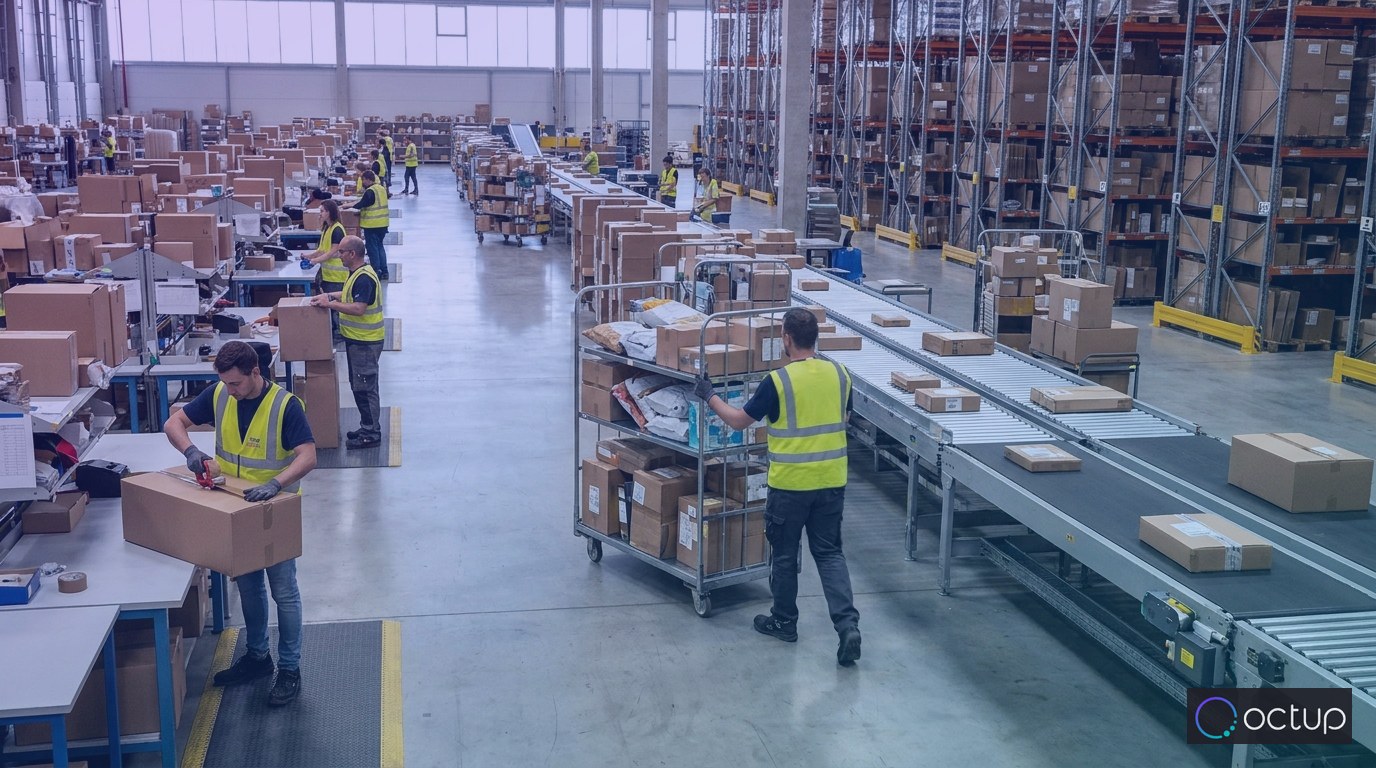
Optimize your warehouse configuration for BFCM performance based on past sales data, positioning popular items for quick access. Adopt methods such as batch or zone picking to manage higher order volumes effectively. Establish specialized BFCM packing areas fully equipped with essential supplies.
Create clear pathways and signage to prevent bottlenecks and aid navigation, especially for temporary staff. A well-organized layout improves speed and reduces errors during the BFCM rush. Conduct practice runs to identify and resolve issues early.
3) Ensure Technology is Scalable
Thoroughly examine and pressure-test your tech infrastructure to manage BFCM's surge in orders. Concentrate on essential software: WMS, order management, and shipping systems. Verify these platforms can efficiently handle elevated transaction loads without disruptions.
Verify that your WMS can efficiently manage larger inventory movements and provide real-time updates. Test your order management system's ability to handle a surge in simultaneous orders. Confirm your shipping software can generate labels and manage carrier integrations at an accelerated pace.
Consider temporary upgrades or additional server capacity if needed. Implement monitoring tools to alert you of any performance issues during peak times.`
4) Plan for Shipping Delays and Carrier Capacity
Prepare for potential shipping delays and carrier limitations during BFCM. Engage with shipping partners to understand their capacities and expand your carrier network to reduce risks. Collaborate with clients to set realistic delivery timeframes and refine customer communications accordingly.
You can also leverage Octup's billing automation feature for transparent, real-time reporting to clients. This tool tracks shipping costs, transit times, and delays, allowing for accurate invoicing and proactive problem-solving during the BFCM rush.
5) Staffing and Training
Plan ahead to augment your workforce with temporary staff or seasonal employees for the BFCM rush. Provide in-depth instruction on your systems, procedures, and best practices, emphasizing techniques for managing increased order volumes efficiently. Consider implementing a buddy system, pairing experienced team members with newcomers to facilitate on-the-job.
Utilize Octup's data visualization tools to empower team members with real-time operational insights. These tools provide clear, actionable information, enabling staff to make informed decisions and respond quickly to changing BFCM demands.`
6) Enhance Client Communication and Reporting
Foster open dialogue with Ecommerce clients regarding BFCM delivery timelines and possible delays. Promptly update them on operational shifts or hurdles that could impact their customers' experiences. Maintain consistent communication to ensure alignment and manage expectations throughout the busy season.
Leverage Octup's customizable dashboards to provide clients with real-time access to critical data. These dashboards offer instant visibility into order status, inventory levels, and shipping performance, reducing the need for back-and-forth inquiries and empowering clients to make informed decisions throughout the BFCM period.
7) Test Systems in Advance
Execute comprehensive pressure tests on all tech systems—WMS, order processing, and shipping integrations—prior to BFCM. Replicate peak order scenarios to uncover potential workflow bottlenecks or vulnerabilities. Address any identified issues promptly to ensure smooth operations during the high-volume period.
Utilize Octup's analytics to forecast order volumes and simulate various BFCM scenarios. These insights help pinpoint areas that may need reinforcement or optimization, ensuring your systems are fully prepared to handle the BFCM rush efficiently and without disruptions.
8) Leverage Data for Real-Time Decision Making
Harness live data to drive strategic decisions during BFCM. Monitor key metrics—order volume, processing speeds, and shipping statuses—to identify emerging trends and challenges. Leverage these real-time insights to quickly adjust operations and maintain peak efficiency throughout the event.
Use Octup's real-time analytics to gain instant insights into warehouse operations, allowing you to quickly reallocate resources, adjust picking strategies, or address bottlenecks. This data-driven approach enables agile decision-making, helping you maintain efficiency and meet client expectations throughout the BFCM period.
Are you a 3PL curious to give Octup a try? Start your free trial today.

Octup



About the Author: Blake Read
Blake Read is an Account Executive at Octup. Blake has spent his career inside 3PLs and e-commerce fulfillment. Before Octup, he was Fulfillment Senior Account Executive at LVK Logistics, a tech-forward 3PL powered by ShipHero, where he worked directly with brands navigating the realities of outsourced fulfillment. Earlier, he helped scale a 3PL to 8-figure ARR across operations, sales, and customer success, and started out at e-com fulfillment provider Cargo Cove (acquired by ShipHero in 2021). Nearly a decade inside 3PLs and e-com brands means he's lived every role on both sides of the fulfillment conversation. Connect with Blake on LinkedIn.
Related Posts
.webp)